Most businesses do not fail at SEO because they lack effort. They fail because they never built an actual strategy. They publish content without keyword direction, fix technical issues without prioritisation, and chase rankings without connecting any of it to leads or revenue.
A real search engine optimization strategy ties every action to a clear outcome. It tells you which keywords matter, which content to create first, which technical fixes move the needle, and how to measure whether any of it is working. Without that structure, SEO becomes a list of disconnected tasks instead of a system that compounds over time.
This guide walks through the complete process of building an SEO strategy from the ground up: setting goals, researching keywords, structuring content, fixing technical foundations, building authority, and measuring results. If you want the broader picture first, start with why search optimization matters for your business before building your plan.
What You Will Learn in This Guide
- What Is an SEO Strategy and Why You Need One
- Before You Start: Setting Goals and Defining Success
- Step 1: Keyword Research and Topic Mapping
- Step 2: Fixing Your Technical Foundation
- Step 3: On-Page Optimization Strategy
- Step 4: Content Strategy and Topical Authority
- Step 5: Link Building and Authority Growth
- Local SEO Strategy for Location-Based Businesses
- Measuring and Adjusting Your Strategy
- Common SEO Strategy Mistakes to Avoid
- Frequently Asked Questions
What Is an SEO Strategy and Why You Need One
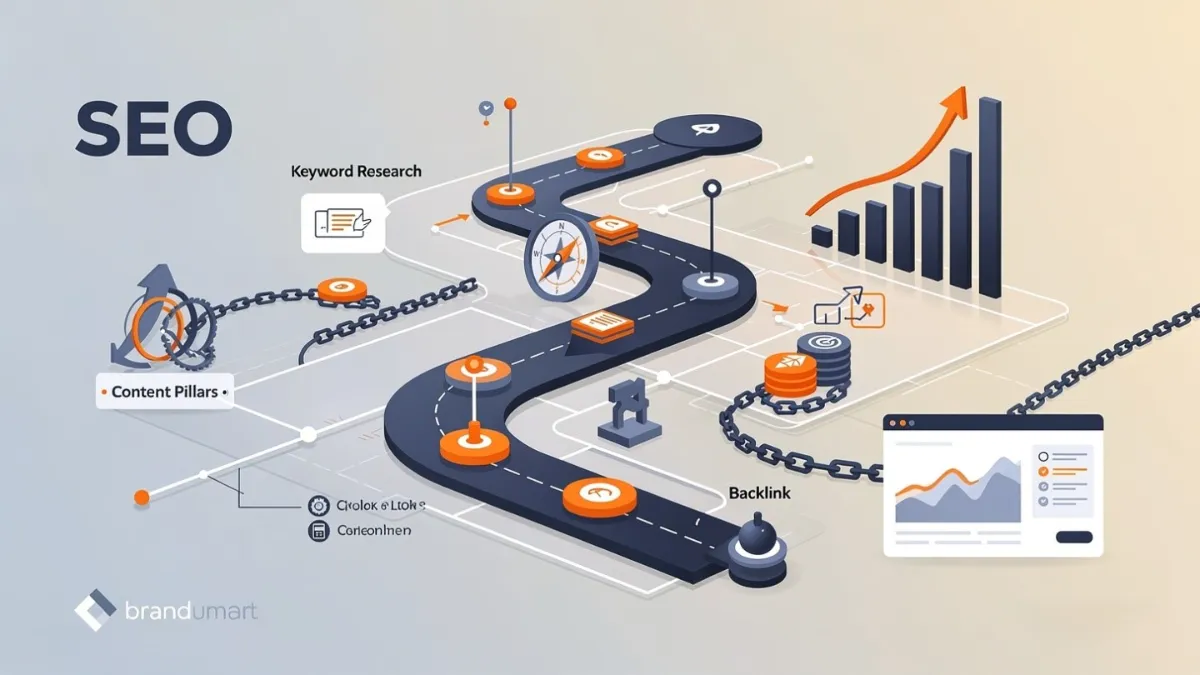
A search engine optimization strategy is a documented plan that connects your business goals to specific, prioritised SEO actions. It answers four questions clearly: who you are trying to reach, what they are searching for, what content and technical work will help you rank for those searches, and how you will measure whether it is working.
Without a strategy, SEO becomes reactive. You publish a blog post because a competitor published one. You fix a technical error because a tool flagged it as urgent, not because you understand its actual business impact. You stop measuring progress because there was never a clear target to measure against.
What a Real SEO Strategy Includes
- Clear business goals connected to specific keyword and traffic targets
- A keyword map organized by topic, intent, and priority
- A content calendar built from that keyword map, not random ideas
- A technical health baseline with a prioritised fix schedule
- A link building approach matched to your industry and resources
- A measurement framework tied to leads and revenue, not just rankings
The businesses that win in organic search over multi-year timelines are not the ones doing the most SEO activity. They are the ones doing the right activity, in the right order, guided by a strategy that gets revisited and refined as real data comes in.
Before You Start: Setting Goals and Defining Success
Every strong strategy starts with a goal that is more specific than “rank higher on Google.” Higher rankings are a means, not an end. The real question is: what business outcome do you need SEO to drive?
Common SEO Goals and What They Mean for Strategy
- Lead generation: Prioritise service and solution pages, build content around buyer-intent keywords, and track form submissions and calls as your core metric
- E-commerce sales: Prioritise product and category pages, focus on transactional keywords, and track organic revenue and conversion rate
- Brand awareness: Prioritise top-of-funnel content, target informational keywords at scale, and track impressions and organic traffic growth
- Local foot traffic: Prioritise Google Business Profile optimization and local landing pages, and track map pack visibility and direction requests
Once your goal is clear, set a realistic timeline. SEO is not a 30-day channel. Most strategies need 4 to 6 months before showing measurable ranking movement, and 9 to 12 months before showing meaningful traffic and revenue growth on competitive keywords. Set expectations accordingly from day one.
Step 1: Keyword Research and Topic Mapping
Keyword research is the foundation every other part of your strategy is built on. Get this step wrong and everything downstream, your content, your internal linking, your page structure, ends up misaligned with what your audience actually searches for.
Start With Search Intent, Not Just Volume
High search volume means nothing if the searcher’s intent does not match what your business offers. A keyword search for “what is SEO” has high volume but low commercial value for an agency selling SEO services. A keyword like “SEO services for small business” has lower volume but far higher buying intent. Strategy means choosing depth over vanity numbers.
The Four Types of Search Intent
- Informational: The searcher wants to learn something (“what is search engine optimization”)
- Navigational: The searcher wants a specific website or brand (“Semrush login”)
- Commercial investigation: The searcher is comparing options before buying (“best SEO tools for small business”)
- Transactional: The searcher is ready to act (“hire SEO agency near me”)
Build a Topic Cluster Map
Rather than picking individual keywords at random, group them into topic clusters built around one pillar page supported by multiple related cluster pages. This structure helps search engines understand the depth of your coverage on a topic and helps users navigate naturally between related content through internal linking.
For a deeper breakdown of the tools that support this research phase, the guide to SEO marketing tools covers platforms built specifically for keyword discovery and intent classification.
Step 2: Fixing Your Technical Foundation
Content and links cannot compensate for a technically broken website. If Google cannot crawl your pages, cannot render them correctly, or finds them too slow to load, your rankings will stay capped no matter how good your content is.
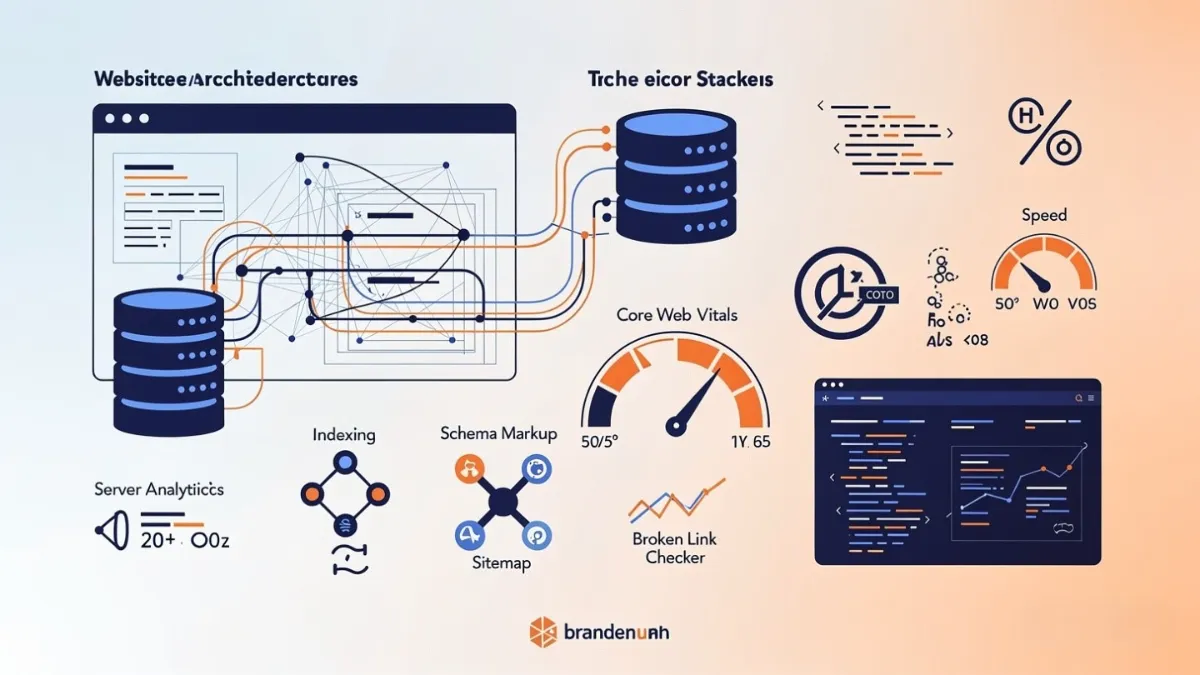
The Technical Priorities Every Strategy Should Include
- Confirm every important page is crawlable and indexable, with no accidental noindex tags or robots.txt blocks
- Fix Core Web Vitals issues, especially on mobile, where most search traffic now originates
- Resolve broken links and redirect chains that waste crawl budget and frustrate users
- Implement clean URL structures and a logical site architecture that reflects your topic clusters
- Set up and submit an accurate XML sitemap through Google Search Console
- Confirm HTTPS is implemented correctly with no mixed content warnings
Run a full technical audit before building anything else into your strategy. The complete process for this is covered in detail in the SEO analysis and website audit guide, which walks through exactly how to identify and prioritise technical fixes.
Step 3: On-Page Optimization Strategy
On-page optimization connects your keyword research to the actual pages on your site. This is where strategy turns into execution at the page level.
On-Page Elements Your Strategy Should Standardise
- Title tags that include the primary keyword naturally and stay under 60 characters
- Meta descriptions that summarise the page accurately and include a soft call to action
- One clear H1 per page that matches search intent, followed by a logical H2 and H3 hierarchy
- Primary keyword placement in the first 100 words, naturally, without forcing it
- Internal links connecting related pages within the same topic cluster
- Descriptive image alt text that supports both accessibility and image search visibility
Build a simple on-page checklist and apply it consistently across every new page and every page you update. Consistency at this level compounds across hundreds of pages over time, far more than any single perfectly optimised page ever will.
Step 4: Content Strategy and Topical Authority
Content is how your keyword strategy becomes visible to search engines and useful to your audience. But content created without structure rarely builds the kind of topical authority that earns consistent rankings across an entire subject area.
Build Pillar and Cluster Content
A pillar page covers a broad topic comprehensively. Cluster pages cover specific subtopics in depth and link back to the pillar. This structure signals topical depth to search engines and creates a natural internal linking network that distributes authority across related pages.
How to Plan Your Content Calendar
- Start with your highest-priority pillar topics based on commercial value and search volume
- Map 4 to 8 cluster topics under each pillar that answer specific related questions
- Schedule pillar pages first, then build cluster content around them over the following months
- Update and expand existing content quarterly rather than only publishing new pages
- Track which content drives leads or sales, not just traffic, and double down on what works
Step 5: Link Building and Authority Growth
Backlinks remain one of the strongest ranking signals available. A content and technical strategy without a link building component will plateau against competitors who are actively earning authority through quality links.
Link Building Approaches Worth Including in Your Strategy
- Digital PR: earning coverage and links through newsworthy company announcements or original research
- Guest contributions: writing for relevant industry publications with a natural link back to your site
- Resource link building: creating genuinely useful tools, guides, or data that other sites want to reference
- Unlinked mention recovery: finding existing mentions of your brand online and asking for a link to be added
- Local citations: for location-based businesses, consistent listings across relevant directories build local authority
Local SEO Strategy for Location-Based Businesses
If your business depends on customers within a specific geographic area, your strategy needs a local layer that general SEO advice does not fully address.
Core Components of a Local SEO Strategy
- A fully optimised Google Business Profile with accurate categories, hours, and regular updates
- Consistent business name, address, and phone number across every directory and citation source
- Location-specific landing pages for businesses serving multiple cities or service areas
- A steady, genuine flow of customer reviews across Google and relevant industry platforms
- Local link building through community involvement, sponsorships, and local press coverage
This local layer matters across industries. Service businesses, healthcare providers, and professional firms all rely on it differently. For example, SEO strategy for law firms depends heavily on answering the specific questions potential clients search for at the moment they need help, paired with strong local visibility in their practice area.
Measuring and Adjusting Your Strategy
A strategy without measurement is just a guess with extra steps. Build a simple, consistent reporting rhythm so you know whether your plan is actually working and where it needs adjustment.
What to Track and How Often
- Weekly: Keyword ranking positions for your priority terms and any sudden traffic changes
- Monthly: Organic traffic trends, new technical errors, and content performance by page
- Quarterly: Full strategy review against your original goal, competitor benchmarking, and content calendar adjustments
Connect every metric back to your original goal sentence. If your goal is lead generation, track organic leads and conversion rate, not just traffic and rankings. A strategy that grows traffic by 50% but generates zero additional leads has not actually succeeded.
Common SEO Strategy Mistakes to Avoid
- Treating SEO as a list of tasks instead of a connected system. Every action should trace back to your keyword map and your business goal.
- Targeting keywords with no realistic path to ranking. Match your keyword difficulty targets to your site’s current authority level.
- Publishing content with no internal linking plan. Isolated pages rarely perform as well as pages connected through a clear topic cluster.
- Ignoring technical health while focusing only on content. Technical issues cap how well even excellent content can perform.
- Expecting fast results on competitive keywords. Set realistic timelines from the start so the strategy is not abandoned before it has time to work.
- Never revisiting the strategy after the first version. SEO strategy is a living document, not a one-time plan you write and forget.
Conclusion: Strategy Turns SEO Effort Into Compounding Results
A search engine optimization strategy is what separates businesses that see steady, compounding organic growth from those that publish content and fix errors without ever connecting the dots. The difference is not effort. It is structure.
Start with a clear goal. Build your keyword map. Fix your technical foundation. Create content around real topic clusters. Build authority deliberately. Measure consistently. Review quarterly and adjust based on what the data actually shows, not what you assumed when you started.
Ready to put this into action? Explore the complete guide to SEO tools for small businesses to find the right platforms for executing this strategy, or learn more about professional SEO optimization services if you would rather have an experienced team build and manage it for you.
Frequently Asked Questions
What is a search engine optimization strategy?
A search engine optimization strategy is a structured plan connecting business goals to specific SEO actions: keyword research, technical fixes, content creation, and link building. It defines priorities, timelines, and measurement so every SEO task contributes to a clear business outcome rather than existing as an isolated activity.
How long does it take to see results from an SEO strategy?
Most SEO strategies show early ranking movement within 4 to 6 months and measurable traffic and lead growth within 9 to 12 months. Highly competitive keywords or new websites with no existing authority may take longer. Local and long-tail keyword strategies often show faster initial results than competitive national terms.
What is the difference between SEO strategy and SEO tactics?
Strategy is the overall plan connecting your business goals to a prioritised set of actions. Tactics are the individual activities that execute that plan, such as writing a blog post, fixing a broken link, or earning a backlink. A strategy without clear tactics never gets implemented, and tactics without a strategy rarely produce consistent, compounding results.
Should small businesses build their own SEO strategy or hire an agency?
It depends on internal resources and expertise. Small businesses with time and willingness to learn can build an effective foundational strategy using free tools and the frameworks covered in this guide. Businesses with limited time, more competitive markets, or larger growth targets often benefit from a professional agency that can execute faster and avoid common early mistakes.
How often should an SEO strategy be updated?
Review your strategy every quarter at minimum. Algorithm updates, competitor movements, and changes in your own business priorities all affect whether your current plan still makes sense. A strategy reviewed once a year is too static to adapt to how quickly search behaviour and competition shift.
What should come first in an SEO strategy: content or technical fixes?
Technical fixes should generally come first. If your site has significant crawlability, indexation, or speed issues, new content will not perform to its full potential until those foundational problems are resolved. Once your technical health is solid, content and link building can scale effectively on top of it.
Can a small business compete with larger competitors using SEO strategy alone?
Yes, particularly through long-tail keywords, local SEO, and topical depth in a specific niche where larger competitors have not built focused content. A smaller business with a clear, consistent strategy can outrank larger competitors on specific, well-targeted keywords even without matching their overall site authority or budget.