A few years ago, a marketing plan was fairly simple. Rank on Google, run some ads, post on social media, send a newsletter. If you did those four things reasonably well, customers found you.
That plan still works in parts. But anyone who has looked at their analytics lately has probably noticed something odd. Rankings look fine, yet traffic is softer. Ad costs creep up. Customers mention they “asked ChatGPT” or “saw it on YouTube” before they ever visited the website.
Nothing is broken. The way people find and choose businesses has shifted, and marketing has to shift with it. This guide explains what is actually changing, what is just noise, and what to do about it this quarter, in plain language and without the hype.
What This Guide Covers
- AI Answers Are Now Part of the Buyer Journey
- People Search Everywhere, Not Just on Google
- Fewer Clicks, Higher Intent
- Trust and Real Expertise Matter More
- Paid Media Is More Automated
- First-Party Data and Privacy
- Local and Community Signals Are Growing
- Old Playbook vs New Playbook
- What Has Not Changed
- Mistakes to Avoid While Adapting
- Your 30-Day Action Plan
- Frequently Asked Questions
AI Answers Are Now Part of the Buyer Journey
Search used to return a list of links. Today, many searches start with a written answer generated by AI, either at the top of Google or inside tools like ChatGPT, Gemini, and Perplexity. The customer reads the summary first and clicks later, if at all.
This changes what “being found” means. Ranking number one still helps, but being mentioned, quoted, or recommended inside an AI answer is becoming a second goal. Marketers now call this answer engine optimization or generative engine optimization. The names are new. The core idea is old: be the clearest, most trustworthy source on your topic.
What Tends to Get Cited in AI Answers
- Pages that answer a question directly in the first few lines, then add depth below
- Content with clear headings, short paragraphs, and structured data that machines can read easily
- Brands mentioned consistently across trusted websites, not just their own
- Original data, real examples, and named experts instead of generic summaries
- Accurate, up-to-date information with visible authors and sources
If you want the practical side of this, the guide on using AI for SEO covers how to work with AI tools without publishing the kind of thin content that search engines and readers both ignore.
People Search Everywhere, Not Just on Google
Ask a 22-year-old how they look for a restaurant, a skincare product, or a plumber. Many will say TikTok, Instagram, YouTube, or Reddit before Google. Ask a business owner how they research software, and they may say LinkedIn or a podcast. Discovery has split across many surfaces.
A good example from South Asia: in Pakistan and India, a large share of local buying decisions happen on WhatsApp, a free messaging app used by hundreds of millions of people. A shop owner shares a product photo in a group, a friend replies with a recommendation, and the sale happens without a single Google search. The global version of this is the same story in a different costume: customers trust a person or community they follow more than a search result.
The takeaway is simple. Your brand needs to be easy to find and easy to trust wherever your customers already spend time. That does not mean being on every platform. It means picking two or three that matter and showing up with consistent, useful content.
Search engines still matter enormously, and the way SEO and digital marketing work together is a useful lens here. Your blog, videos, social posts, and ads should all reinforce the same message instead of living in separate boxes.
Fewer Clicks, Higher Intent
When an AI summary or a featured result answers a question, the searcher may not click anything. Marketers call these zero-click searches. For informational queries, this means traffic can drop even when your content is doing its job.
The silver lining is that the visitors who do click often arrive later in their decision. They have already read a summary, compared options, and narrowed their choice. They are fewer, but they tend to be warmer.
So the scoreboard has to change. Traffic alone is no longer a reliable sign of success. A page that brings in 500 casual readers can matter less than one that brings in 40 people ready to book a call.
Metrics Worth Tracking Now
- Leads, calls, bookings, and sales from organic and paid channels, not just sessions
- Branded search growth: more people typing your company name into Google
- Impressions and click-through rate in Google Search Console
- Whether your brand appears when you ask AI tools questions about your service
- Conversion rate by landing page, so you know which pages actually earn revenue
Trust and Real Expertise Matter More
As AI makes it cheap to produce average content, average content stops standing out. Google’s quality systems reward pages that show real experience: a named author, first-hand examples, honest trade-offs, and facts that can be checked.
Think about the last time you hired someone. You probably did not choose the company with the longest blog post. You chose the one that made you feel they had done this before and would not waste your time.
Your content should create that same feeling. Share the project that went wrong and what you learned. Show real numbers where you can. Put a face and a name behind the advice.
Simple Ways to Show Real Expertise
- Add an author name, short bio, and relevant experience to every article
- Include a short client story or case result in each major guide
- Use screenshots, data, and specific examples instead of vague claims
- Cite credible sources and keep older posts updated
- Display reviews, certifications, and clear contact details on your site
Paid Media Is More Automated
Ad platforms are handing more decisions to automation. Campaign types such as Google’s Performance Max and Meta’s Advantage+ choose placements, audiences, and often creative combinations on their own. Your job moves from pulling levers to feeding the machine good inputs.
That puts weight on things you can still control: clean conversion tracking, strong offers, quality creative, and accurate customer data. A campaign with bad tracking and weak creative will simply waste money faster when automation is switched on.
First-Party Data and Privacy
Browsers and regulators continue to limit third-party tracking. In the United States, UK, Canada, and Australia, privacy rules are tightening, and customers are more aware of how their data is used. The practical result is that platform-reported numbers are less complete than they used to be.
First-party data is information customers share with you directly: email signups, purchase history, form fills, survey answers. It is permission-based, more accurate, and fully yours. A healthy email list now matters more than a large but rented social following.
Ways to Build First-Party Data Honestly
- Offer a genuinely useful resource, checklist, or free tool in exchange for an email address
- Ask customers what they want to hear about instead of assuming
- Use clear consent wording and make unsubscribing easy
- Connect your website analytics, CRM, and email platform so data tells one story
- Set up and verify tracking in Google Analytics 4 before spending more on ads
Local and Community Signals Are Growing
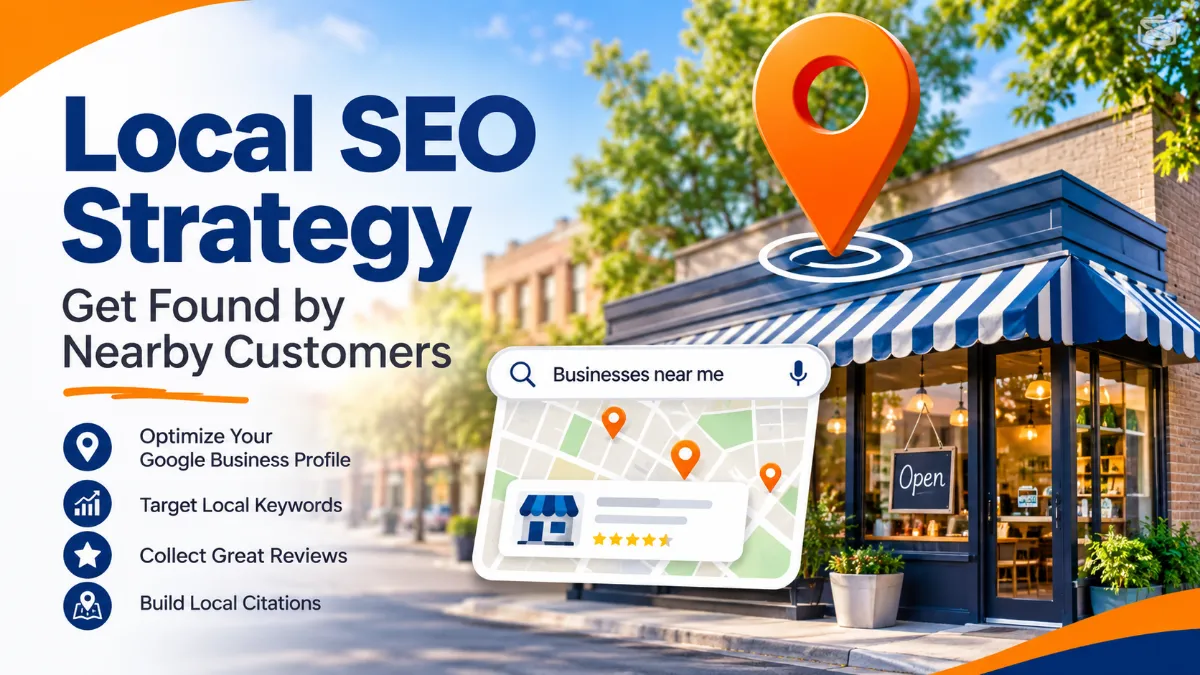
Broad, generic content is getting harder to rank and easier to replace. Local, specific, and community-backed content does the opposite. A guide written for a specific city, with local examples and real reviews behind it, gives search engines and AI tools something they can trust.
If you serve a specific area, your Google Business Profile, customer reviews, and local pages carry more weight than ever. The guide to small business SEO in Columbus shows how one city’s market shapes the exact tactics worth using.
Old Playbook vs New Playbook
| Area | The Old Way | The New Way |
|---|---|---|
| Search goal | Rank number one for keywords | Be visible, cited, and trusted across Google, AI tools, and social |
| Content | Publish often, target keywords | Publish less, add real experience and original insight |
| Success metric | Traffic and rankings | Leads, revenue, and branded demand |
| Paid ads | Manual targeting and bidding | Automated campaigns fed by quality data and creative |
| Audience data | Third-party tracking | First-party data: email lists, CRM, direct feedback |
| Channels | Google plus one or two social platforms | Search everywhere: Google, YouTube, social, communities, AI tools |
What Has Not Changed
With so much talk about disruption, it is easy to forget what stays steady. Customers still want clear answers, fair prices, honest businesses, and fast replies. Websites still need to load quickly, work on phones, and be easy to crawl. Search engines still reward helpful content from trusted sources.
That means the basics are not dead. They are the foundation. A solid technical setup, a clear keyword plan, and useful content remain the base on which everything above is built. The complete SEO strategy guide walks through that foundation step by step.
Mistakes to Avoid While Adapting
- Chasing every new trend. You do not need to be on every platform or buy every new tool. Pick the changes that match where your customers actually are.
- Publishing AI content with no human input. Generic output blends into the crowd. Add your own experience, examples, and opinions.
- Judging success by traffic alone. A smaller number of ready-to-buy visitors beats a large number of casual readers.
- Ignoring technical health. New strategies fail on slow, broken sites. Regular audits keep the base solid, and the SEO analysis guide shows how to run one.
- Relying on one channel. If a single algorithm update or platform change can wipe out your leads, your marketing is too fragile.
- Letting automation run unchecked. Automated campaigns need regular review of tracking, spend, and lead quality.
Your 30-Day Action Plan
You do not need a full rebuild. Small, steady moves add up. Here is a practical month to start with:
- Ask your last ten customers where they first heard about you and what they checked before contacting you
- Test five questions about your service in ChatGPT, Gemini, or Perplexity and note whether your brand appears
- Update your top three pages with a direct answer at the top, a named author, and one real example
- Check that conversion tracking in Google Analytics 4 records only real leads and sales
- Start or clean up an email list and offer one genuinely useful resource to grow it
- Pick two channels beyond Google where your customers spend time and plan one piece of content for each
- Review results at day 30 and keep what moved leads, not just traffic
If you need help choosing platforms for tracking and research, the guide to the best SEO tools for small businesses compares free and paid options by budget.
Final Thoughts
Digital marketing is not being replaced. It is being reshaped around a simple idea: customers reward the brands that are genuinely helpful and easy to trust, wherever they happen to be looking.
Technology will keep changing. AI tools will improve, platforms will rise and fade, and reporting will get messier. The businesses that stay steady are the ones that keep returning to the same questions. Are we useful? Are we visible where it matters? Can customers verify that we know what we are talking about?
Answer those honestly, measure what matters, and adjust a little every month. That approach has worked through every change so far, and it is the safest bet for the next one.
Frequently Asked Questions
What is changing most in digital marketing right now?
The biggest change is how people discover brands. AI-generated answers, social platforms, and video now sit alongside Google as places where buyers research and decide. This is pushing marketers to focus on visibility and trust across multiple channels, not just rankings on one search engine.
Is SEO still worth it with AI search growing?
Yes. AI tools and search engines both rely on clear, trustworthy, well-structured content, which is what good SEO produces. The goal is widening from ranking pages to being cited and recommended. Strong fundamentals support both.
What is answer engine optimization?
Answer engine optimization, or AEO, is the practice of structuring content so AI tools and search features can easily use it in direct answers. It involves clear question-based headings, concise answers, structured data, and credible sources.
How should small businesses adapt to these changes?
Start with the basics: fix tracking, improve your top pages, and build an email list. Then choose two or three channels where your customers actually spend time. Small businesses do not need every new tool. They need consistent, useful content and clear measurement.
Will AI replace digital marketers?
AI is taking over repetitive tasks such as drafting, reporting, and basic optimization. Strategy, creativity, relationship building, and judgment still depend on people. Marketers who learn to use AI well, and add real experience on top, are in the strongest position.