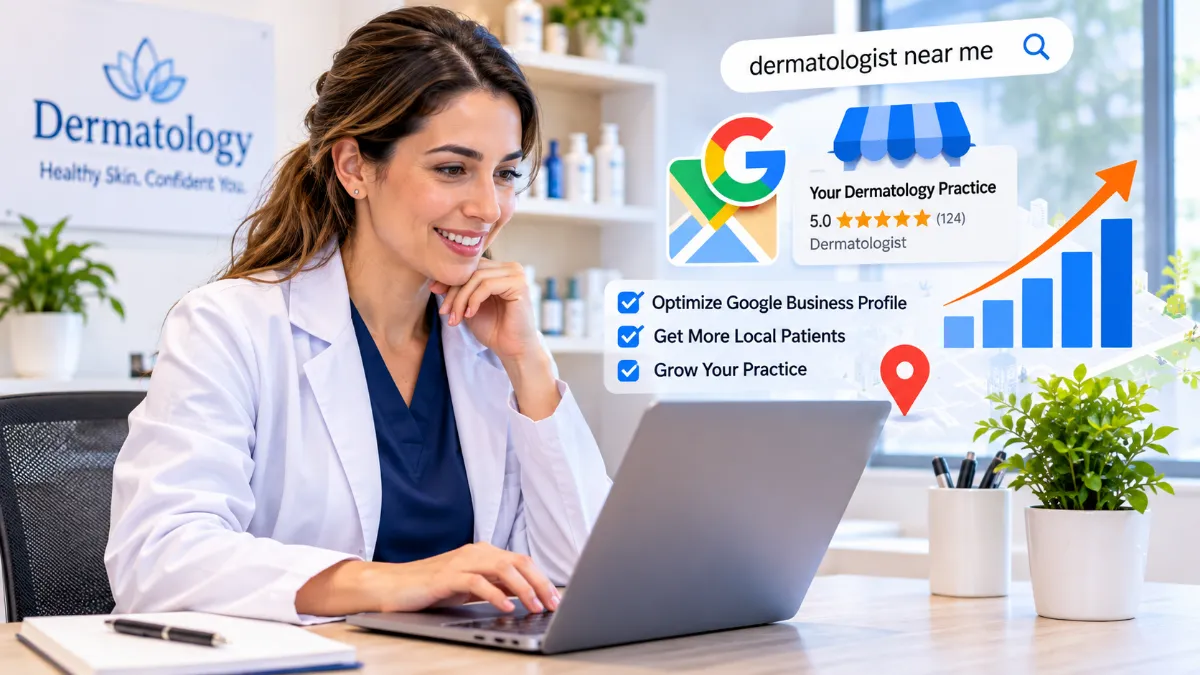
Choosing digital marketing services can feel complicated when a dermatology practice is already managing appointments, clinical teams, and day-to-day operations. One agency may recommend SEO, another may focus on paid ads, and a third may offer social media management. The useful question is not how many services a clinic can buy. It is which services help the right people find the practice, understand its offerings, and contact the team.
This guide explains the core digital marketing services a US dermatology practice should consider, what each one is meant to do, and how to prioritize them without paying for work the clinic does not need.
Table of Contents
Which Digital Marketing Services Does a Dermatology Practice Need?
The right service mix depends on the practice’s location, size, specialties, competition, budget, and growth goals. Most clinics should establish a strong website and local presence before expanding into several paid channels. These are the main services to evaluate.
1. Website design and conversion improvements
The website is often where a prospective patient checks whether a clinic offers the service they need, where it is located, who provides care, and how to request an appointment. It should make those details easy to find on both desktop and mobile devices.
Important website features
- Clear pages for the dermatology services the practice actually provides.
- Provider biographies with accurate qualifications and professional information.
- Location, phone number, office hours, and directions that are easy to find.
- Simple appointment request options and clear instructions about what happens next.
- Accessible navigation, readable text, and responsive mobile layouts.
- Fast-loading pages and secure website connections.
A website redesign is not automatically necessary. Sometimes the better investment is improving confusing service pages, fixing broken forms, or making the phone number more visible. The clinic should identify the actual usability problem before commissioning a full rebuild.
2. Search engine optimization (SEO)
SEO helps search engines discover and understand a practice’s website and its pages. For dermatology clinics, this can include technical improvements, service-page optimization, useful educational content, internal links, and local search signals. SEO is an ongoing process, not a promise of a specific ranking or number of new patients.
A practice should begin with the services and locations it genuinely serves. For example, a clinic may need separate, useful pages for medical dermatology and cosmetic dermatology if both are offered. Those pages should answer different visitor questions rather than repeat the same generic copy with a changed keyword.
BrandUmark’s professional SEO optimization service guide provides additional context about the types of work an SEO engagement can include.
3. Local SEO and business profile management
Local SEO helps people discover a practice when they search for relevant services in a particular area. Accurate name, address, phone number, hours, categories, and website details matter. A complete Google Business Profile can also help visitors check the clinic’s location, contact information, and public reviews.
Clinics should keep listings accurate and avoid creating duplicate profiles or using misleading categories. Review requests should invite honest feedback without incentives, pressure, or attempts to dictate what a patient writes. Responses should be professional and should not reveal or confirm private patient information.
4. Content marketing
Content marketing gives a practice a way to answer common questions and explain its services before someone contacts the clinic. Useful content may include service explanations, provider introductions, appointment preparation information, and answers to non-diagnostic administrative questions.
Because dermatology is a healthcare subject, clinical accuracy matters. Medical content should be reviewed by a qualified professional, use appropriate context, and avoid presenting individual outcomes as guaranteed. Content should help readers understand the practice, not replace a medical consultation.
BrandUmark’s SEO strategy guide explains how content, search intent, and site structure can support a connected search strategy.
5. Paid search advertising
Paid search can put a practice’s ads in front of people searching for selected services. It may be useful when a clinic wants to test demand in a defined service area or promote a specific service, but campaign performance depends on targeting, competition, ad quality, landing pages, and follow-up.
Before launching, define the campaign’s geographic area, service focus, budget, conversion action, and process for handling inquiries. Avoid sending every ad visitor to the homepage if a focused service page would answer the search more directly. Check applicable healthcare advertising policies and legal requirements before using sensitive audience data or making treatment-related claims.
6. Online reputation management
Public reviews can influence how people evaluate a clinic. Reputation management includes monitoring feedback, inviting honest reviews through an appropriate process, and responding calmly to concerns. It also includes improving the real patient experience rather than treating reviews as a numbers-only marketing task.
Staff should not disclose patient details in public replies. Even a response intended to be helpful can create privacy concerns if it confirms that someone received care at the practice.
7. Social media marketing
Social media can help a dermatology practice share clinic updates, introduce providers, explain available services, and distribute clinician-reviewed educational material. The practice should select platforms based on its audience and the time available to manage them consistently.
Social media should not become a place for individualized diagnosis in comments or direct messages. Set clear boundaries for medical questions and guide people toward appropriate clinical channels. Any patient images, testimonials, or stories require careful review of consent, privacy, and applicable professional rules.
8. Analytics and conversion tracking
Analytics helps the practice understand which pages people visit and which marketing activities lead to calls or appointment inquiries. Useful measurement may include search impressions, website visits, form submissions, calls, and the quality of inquiries. Marketing reports should connect digital activity to operational outcomes wherever possible.
Use tools such as SEO marketing tools to support research and performance reviews. Google Search Console can help monitor search performance, while Google Analytics can provide website usage information when configured appropriately.
How Do These Digital Marketing Services Work Together?
These services are most useful when they support the same patient journey. SEO may help someone discover a clinic, a service page may explain what the practice offers, reviews may help the visitor evaluate the experience, and a clear contact option may make it easier to request an appointment.
| Service | Role in the patient journey | What to monitor |
|---|---|---|
| Local SEO | Helps nearby searchers discover the practice | Local visibility, profile actions, and relevant website visits |
| Website and service pages | Explains the clinic and its services | Page engagement, calls, and appointment requests |
| Content marketing | Answers questions and provides context | Search queries, useful page visits, and content engagement |
| Paid search | Promotes selected services to targeted searchers | Spend, tracked inquiries, and inquiry quality |
| Reputation management | Helps visitors assess public feedback | Review trends and response quality |
| Analytics | Shows how marketing activity performs | Reliable conversions and channel-level outcomes |
How Should a Dermatology Practice Choose Its Marketing Priorities?
A clinic does not need to purchase every service at the same time. Prioritize based on the biggest gap between what the practice offers and what prospective patients can find or do online.
A practical starting sequence
- Fix essential information: Confirm that the website and business listings show accurate contact details, hours, locations, providers, and services.
- Improve the main website journey: Make it easy to understand the clinic and request an appointment.
- Build local and organic visibility: Improve the Google Business Profile, service pages, and technical SEO basics.
- Publish useful content: Answer real questions that prospective patients have about the practice and its services.
- Test paid promotion selectively: Use a defined budget and track meaningful inquiries before scaling.
- Review performance: Compare channel activity with inquiry handling and appointment outcomes.
For a small or newly opened clinic, the first priorities may be accurate listings, a functional website, and a basic local SEO foundation. A larger practice with several locations may need location-specific pages, more structured reporting, and a consistent process for managing listings and reviews across its offices.
BrandUmark’s overview of digital marketing services can help practice owners understand how different services fit into a broader plan.
What Should a Digital Marketing Provider Include for a Dermatology Practice?
If a clinic hires an agency or consultant, it should expect a clear scope of work rather than vague promises. The provider should explain what will be delivered, who is responsible, how progress will be measured, and what access or approvals are needed from the practice.
Questions to ask before signing
- Which specific services are included in the monthly or project fee?
- Who writes and clinically reviews healthcare-related content?
- How will local SEO and each practice location be handled?
- What reporting will the clinic receive, and how often?
- Who owns the website, ad accounts, analytics accounts, and content?
- How does the provider handle patient privacy and sensitive information?
- What work is excluded, and what may create additional costs?
Be cautious of guaranteed rankings, guaranteed patient numbers, or claims that every clinic needs the same package. A credible provider should explain the work and its limitations in plain language. Google’s SEO Starter Guide is a useful independent resource for understanding basic search optimization practices.
What Common Digital Marketing Mistakes Should Dermatology Practices Avoid?
- Buying a large package without a clear goal: Choose services based on a documented need, not the number of items in a proposal.
- Ignoring the website experience: More traffic will not help much if visitors cannot find services or contact details.
- Using generic healthcare content: Pages should accurately reflect the clinic’s real providers, services, and locations.
- Launching ads without tracking: Set up appropriate measurement before spending so the practice can evaluate results.
- Overlooking privacy: Keep patient information out of marketing workflows unless the practice has verified the required safeguards and permissions.
- Expecting instant SEO results: Organic visibility develops over time and depends on competition, site quality, and ongoing work.
Conclusion: Which Digital Marketing Services Should a Dermatology Practice Start With?
Most dermatology practices should begin with a reliable website, local SEO, accurate business listings, useful service content, and a straightforward appointment inquiry process. Reputation management and analytics help the clinic maintain trust and understand performance. Paid search and social media can be added when they fit the practice’s goals and resources.
The best service mix is the one that solves the clinic’s real marketing problems and can be managed responsibly. Start with the foundations, measure what happens, and expand only when the practice is ready.
- Review the current setup: Check the website, local listings, service pages, and inquiry process.
- Choose the first priority: Fix the biggest barrier to discovery or appointment inquiries.
- Set clear responsibilities: Decide who manages content, reviews, advertising, and inquiry follow-up.
- Track meaningful outcomes: Monitor relevant calls, forms, and appointment requests with appropriate privacy safeguards.
- Reassess monthly: Use performance data to decide which service to improve or add next.
Frequently Asked Questions About Dermatology Digital Marketing
1. What is the most important digital marketing service for a dermatology practice?
For most practices, a clear website and a strong local SEO foundation are sensible starting points. They help visitors understand the clinic, find accurate location and service information, and contact the practice. The best first investment depends on the clinic’s current weaknesses and goals.
2. Do dermatologists need social media marketing?
Not every practice needs to be active on every social platform. Social media can be useful for sharing clinic updates and clinician-reviewed educational content, but it should be maintained consistently and should not be used to provide individual diagnoses through comments or messages.
3. Should a dermatology clinic invest in SEO or Google Ads first?
SEO supports long-term organic visibility, while Google Ads can provide paid visibility for selected searches when campaigns are well managed. A clinic with a weak website or inaccurate business information should usually fix those foundations first. The choice should reflect its timeline, budget, competition, and ability to handle inquiries.
4. How can a dermatology practice know whether its marketing is working?
Track relevant website visits, search performance, calls, form submissions, and appointment requests. Compare those measures with the clinic’s operational records and review the quality of inquiries. Do not rely on impressions or social engagement alone.
5. Can one digital marketing agency manage all marketing services for a dermatology practice?
Some agencies offer SEO, website support, content, paid advertising, and reporting under one engagement. Before hiring one, check the exact deliverables, healthcare experience, review process, account ownership, privacy practices, and reporting. The practice may also choose different specialists if that better fits its needs.