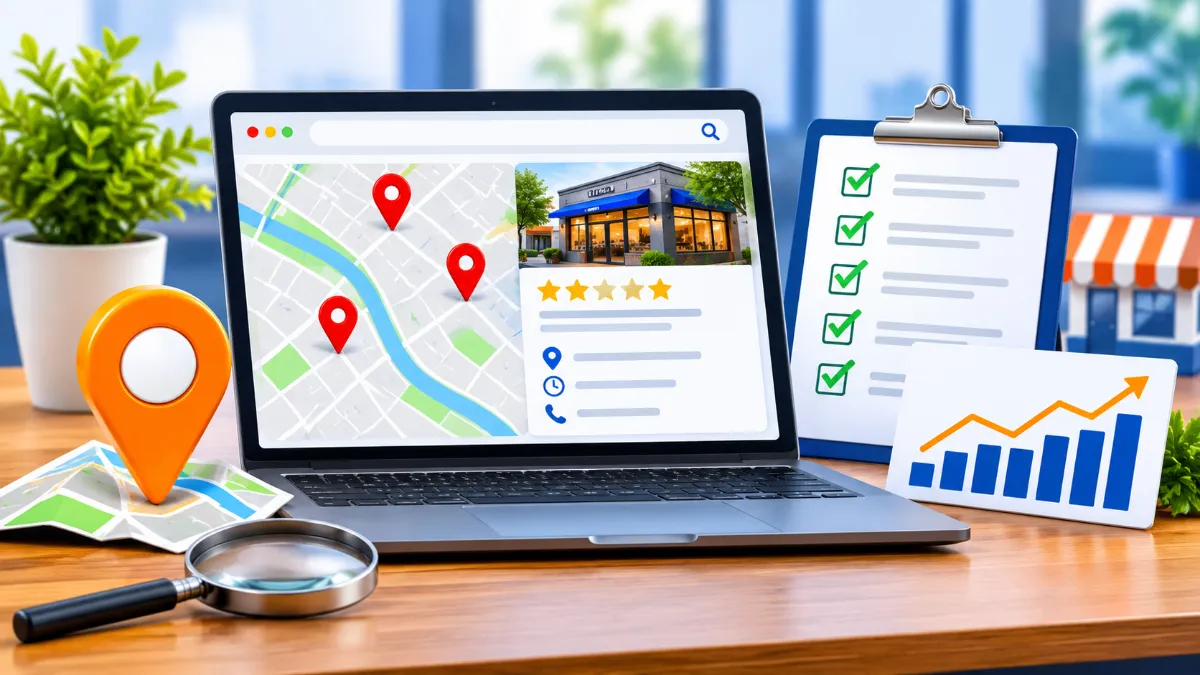
When someone searches for a dermatologist nearby, they often want practical answers quickly: which clinics are close, what services they provide, when they are open, and how to make contact. A dermatology practice can have a well-designed website and still be difficult to discover in local results if its location information is incomplete or inconsistent.
Local SEO helps connect a clinic with people searching for relevant services in its geographic area. It has a narrower focus than general SEO. Instead of optimizing only for broad topics such as acne care or skin examinations, local SEO also helps search engines understand where the practice operates and which nearby searches its information may be relevant to.
Table of Contents
- What local SEO means for dermatology clinics
- Optimize the clinic’s Google Business Profile
- Keep clinic details consistent online
- Create useful location pages
- Build a trustworthy review profile
- Publish content with genuine local relevance
- Earn relevant local references and links
- Measure local SEO performance
- Common local SEO mistakes to avoid
- A practical local SEO action plan
- Frequently asked questions
1. What local SEO means for dermatology clinics
Local SEO is the process of improving a business’s visibility for searches connected to a geographic area. For a dermatology clinic, those searches may include a service and a city, neighborhood, or phrase such as “near me.” Search engines can consider relevance, distance, and prominence when determining which local businesses to show. A clinic cannot control every factor, especially a searcher’s location, but it can make its own information accurate and useful.
Understand where local results appear
People may encounter a dermatology clinic in map results, local business listings, or standard organic search results. These placements are related but not identical. A clinic’s website may appear in regular organic results while its business profile appears separately in a map-based result.
That distinction matters when reviewing performance. A change in website rankings does not necessarily explain a change in map visibility, and a strong business profile does not replace the need for useful service pages on the clinic’s website.
Think about the patient’s local search journey
Imagine someone who has recently moved to a city and wants to find a dermatologist. They may search for a specialty, compare nearby clinics, check office hours, read public reviews, visit a practice website, and then call or submit an appointment request.
Local SEO supports several of those steps by making the clinic’s location and service information easy to find and verify. The website and business profile should work together rather than provide conflicting details.
2. Optimize the clinic’s Google Business Profile
A Google Business Profile is a key source of business information for people using Google Search and Maps. For a dermatology clinic, the profile should accurately represent the real practice and make it easy for prospective patients to confirm basic details.
Claim and verify the correct profile
Confirm that the practice controls the profile associated with its actual clinic location. If a profile already exists, check ownership and access before creating another one. Duplicate or confusing profiles can make it harder for people to identify the correct business.
Use the clinic’s real-world business name. Do not add extra service or location keywords to the name unless they are genuinely part of the name used in the real world. Follow the platform’s current eligibility and representation guidelines when managing the listing.
Complete the important profile fields
Google Business Profile information to review
- Business name: Use the practice’s genuine, consistent name.
- Primary category: Select the most accurate available category for the clinic’s main business.
- Additional categories: Add only categories that accurately describe services or business activities.
- Address: Enter the correct public-facing clinic address where the practice is eligible to display it.
- Phone number: Use a monitored number that connects patients with the correct office.
- Website: Link to the relevant practice website or location page.
- Hours: Keep regular and special hours current.
- Services and description: Explain the clinic accurately without promotional claims or keyword stuffing.
- Photos: Use genuine images that represent the office and team, with appropriate permissions.
Choose categories and services carefully
Categories help describe what a business is. Select the closest accurate primary category available, then use additional categories only when they genuinely apply. Do not select unrelated categories simply because they have search volume.
If the profile supports service details, make sure the information matches what the clinic actually offers. A listing should not suggest that a treatment is available at a location if it is not provided there.
Keep the profile active and accurate
Review hours, phone numbers, website links, and other details whenever the clinic changes its operations. Add new photos when there is a meaningful update to the office or team, rather than posting repetitive images just to appear active. Respond to profile questions or updates through an approved process and avoid sharing private patient information.
3. Keep clinic details consistent online
Search engines and prospective patients may encounter a clinic’s details on its website, business profile, professional directories, healthcare directories, and local organization websites. Consistent information makes it easier to confirm that these references describe the same practice.
Standardize name, address, and phone details
Start with the practice’s official name, address, and main phone number. Use the same accurate information across important listings. Small formatting differences are not always a problem, but conflicting street addresses, outdated phone numbers, or old clinic names can confuse visitors.
For example, if a practice moves from one suite to another, update its website and important listings rather than relying on a single profile edit. Check high-value directories and professional profiles where patients may still find the old address.
Audit important online listings
Make a list of the directories and websites that matter to the practice. Prioritize trusted healthcare directories, professional association listings, local business organizations, and established community resources. Correct inaccurate records and remove duplicates where the platform provides a legitimate process.
| Listing source | What to verify | Priority |
|---|---|---|
| Clinic website | Practice name, address, phone, hours, and location details | Highest |
| Google Business Profile | Ownership, category, address, phone, hours, and website link | Highest |
| Professional directories | Provider names, qualifications, office location, and contact details | High |
| Local and healthcare directories | Correct listing, relevant category, and current contact details | Medium |
| Old or duplicate listings | Outdated locations, former phone numbers, and duplicate records | Review and correct |
Do not pay for a large number of low-quality directory listings. A smaller set of accurate, relevant references is a more sensible starting point than submitting the clinic to every directory available.
4. Create useful location pages
If a dermatology practice operates in more than one location, each clinic may need its own page with accurate, location-specific information. A location page can help patients understand which office is nearby and what services are available there.
What a good location page should include
Useful location-page details
- The actual clinic name and full address.
- A local phone number or the correct central contact number.
- Current opening hours and appointment instructions.
- A map or clear directions where appropriate.
- Providers who work at that location.
- Services genuinely available at that office.
- Accessible parking, public transport, or building access information when relevant.
- Original photos of the location, used with appropriate permissions.
For a single-location practice, a clear contact or location page may be enough. Do not create several near-identical pages for surrounding towns if the clinic has no meaningful presence there. Searchers need accurate information about where care is actually provided.
Avoid doorway-style city pages
Changing only the city name across dozens of pages creates little value for visitors. If the practice serves multiple locations, each page should contain real details about that office, such as its providers, available services, directions, and contact information.
Keep the page focused on helping someone visit or contact that location. BrandUmark’s SEO strategy guide offers a broader framework for organizing optimization work.
5. Build a trustworthy review profile
Public reviews can influence how people evaluate a dermatology clinic before contacting it. They may look for comments about communication, scheduling, office experience, and how clearly the practice explains its processes. Reviews are part of a clinic’s broader online presence, not a shortcut to guaranteed rankings.
Invite honest feedback without pressure
A clinic can establish a consistent process for inviting patients to share genuine feedback after an interaction. Keep the request neutral and voluntary. Do not offer incentives in exchange for positive reviews, pressure patients to leave a particular rating, or ask only people expected to be satisfied.
Follow the review platform’s policies and the practice’s privacy requirements. Staff should not reveal or confirm someone’s patient status in a public response, even when the reviewer includes personal details.
Respond professionally and protect privacy
Thank reviewers for taking the time to leave feedback, and keep responses calm and general. If a review raises a concern, invite the person to contact the office through an appropriate private channel. Avoid discussing appointments, diagnoses, treatments, billing, or any other information that could identify a person as a patient.
Use feedback to improve the patient experience
Review themes can reveal operational issues. If people repeatedly mention difficulty finding the office, unclear directions, or trouble reaching reception, the practice may need to improve its website information or front-desk process. Do not treat reviews only as a marketing score. Use them as one source of service feedback.
6. Publish content with genuine local relevance
Local relevance does not mean adding a city name to every paragraph. It means giving people accurate information that connects the clinic to the community and helps them understand how to access its services.
Write about local access and clinic information
Useful local content can include directions to the office, parking information, public transport options, building access, and which providers work at a particular location. A clinic may also explain how appointments are arranged or what documents patients should bring, provided the information is accurate and approved.
Connect educational content to relevant services
Educational articles can answer common questions about skin health, appointment preparation, or the services the practice provides. When appropriate, link the article to a relevant service page so readers can find more information about the clinic. Keep medical content accurate and have qualified professionals review it.
For example, an article about preparing for a skin examination can link to the practice’s skin examination service page. It should not make unsupported claims or imply that a website article can replace an individual clinical assessment.
Use local keywords naturally
Include the city or neighborhood where it genuinely helps identify the practice. A page title might say “Dermatology Clinic in [City]” if that accurately describes the office. The page should then provide useful details rather than repeating the location phrase unnaturally.
Keyword research tools can help identify how people phrase local searches. BrandUmark’s Google Keyword Planner guide explains how to explore keyword ideas. Use the findings as clues, then prioritize terms that match the clinic’s actual services and service area.
7. Earn relevant local references and links
Local references can help people discover a clinic through organizations and resources they already trust. They may also provide useful context about the practice’s connection to its community. Focus on relevance and legitimacy rather than the number of links collected.
Look for authentic community connections
Depending on the clinic’s activities, relevant opportunities may include professional associations, local business organizations, community health education programs, and reputable event or resource pages. A practice might contribute a clinician-reviewed educational resource or take part in a local health event.
Only pursue references that accurately describe the practice. Avoid paid link schemes, automated backlink packages, and irrelevant guest-post networks. A link should make sense to the audience of the website providing it.
Make provider credentials easy to verify
Accurate provider biographies can support trust and help visitors understand who works at the clinic. Include relevant qualifications, specialties, and professional affiliations only when they are current and verifiable. Where appropriate, link to official professional profiles or institutional biographies.
BrandUmark’s professional SEO optimization resource provides additional context on the wider optimization process, while a clinic’s local work should remain grounded in its real providers and locations.
8. Measure local SEO performance
Local SEO needs regular review. A clinic should know whether its information is accurate, whether people are finding its website and profile, and whether those visits lead to useful contact actions.
Track profile and website activity separately
Business profile performance and website analytics measure different activity. Depending on the reporting available in the profile, the clinic may be able to review actions such as calls, direction requests, or website visits. Google Search Console can show queries and search performance for the website, while analytics tools can help assess on-site behavior when configured appropriately.
| Measure | What to review | Possible improvement |
|---|---|---|
| Profile views and discovery | How people encounter the clinic profile | Check categories, services, and profile completeness. |
| Calls and website clicks | Actions taken from the business profile | Verify phone numbers and destination URLs. |
| Direction requests | Interest in visiting the clinic | Check address accuracy and directions. |
| Local organic queries | Search terms that show the website | Improve relevant location and service pages. |
| Qualified enquiries | Contact requests relevant to the clinic | Clarify services, location details, and next steps. |
Use a consistent review schedule
Check important profile details whenever clinic operations change. Review local search performance monthly or quarterly, depending on the practice’s size and activity. Compare similar periods where possible, and account for seasonality, provider availability, and changes in services.
Do not judge local SEO from one ranking check performed on one device in one location. Search results can vary based on the searcher’s location and other context. Use a combination of profile insights, website data, and qualified enquiry trends.
9. Common local SEO mistakes to avoid
Problems that can weaken local visibility or trust
- Incorrect business details: Keep the practice name, address, phone number, and hours accurate across important sources.
- Keyword-stuffed business names: Use the clinic’s real-world name rather than adding search phrases to the profile name.
- Duplicate profiles: Check for existing listings and follow the platform’s process for resolving duplicates.
- Wrong business categories: Choose categories that accurately represent the clinic.
- Thin location pages: Publish location pages only when they contain useful, office-specific information.
- Incentivized or filtered reviews: Invite honest feedback neutrally and follow platform rules.
- Public replies that reveal patient details: Keep responses general and move sensitive discussions to private, approved channels.
- Ignoring profile changes: Review hours, contact details, and website links when the practice changes.
- Expecting guaranteed map rankings: Focus on accurate information and a better patient experience rather than ranking promises.
One more mistake is treating local SEO as a one-time setup. Clinic information changes, staff members move, services evolve, and office hours may vary. A recurring review process helps keep the practice’s online presence reliable.
10. A practical local SEO action plan
A dermatology clinic does not need to change every listing and page at once. Start with the information patients rely on most, then improve the website and local references in a planned sequence.
- Confirm the real clinic details. Create a master record of the practice name, address, phone number, hours, providers, and services for each location.
- Review the Google Business Profile. Confirm ownership, category, address, phone, hours, website link, services, and photos.
- Correct important listings. Update professional and relevant directory profiles and resolve outdated or duplicate records.
- Improve location information. Make the website’s contact and location pages accurate, useful, and easy to navigate.
- Establish a review process. Invite honest feedback without pressure and use privacy-safe response guidelines.
- Measure local actions. Review profile activity, local search data, relevant enquiries, and changes in the clinic’s operations.
Local SEO helps a dermatology clinic become easier to find and evaluate when people search for care nearby. Accurate listings, useful location pages, genuine reviews, and consistent information create a stronger foundation for local discovery. Keep the work focused on helping people find the correct clinic and understand how to contact it.
Frequently asked questions
1. How does local SEO help a dermatology clinic appear in nearby searches?
Local SEO helps search engines connect a dermatology clinic with relevant searches in its service area. Accurate business information, a complete Google Business Profile, consistent contact details, useful location pages, and genuine reviews can support local discovery. These actions improve the quality of the clinic’s online presence, but they do not guarantee a specific position in map results.
2. Does every dermatology clinic need a Google Business Profile?
A clinic that meets Google’s eligibility requirements can benefit from a profile because it gives people access to key business details in Search and Maps. The profile should represent the real practice and location accurately. Clinics should review current platform guidelines before creating or changing a listing.
3. How many reviews does a dermatology clinic need to rank locally?
There is no universal review count that guarantees local rankings. Clinics should focus on a steady, ethical process for inviting honest feedback and responding professionally. Review quality, relevance, recency, and the wider local search context all matter to how people assess a practice.
4. Should a dermatology practice create a separate page for each location?
If the practice has multiple genuine clinic locations, a dedicated page for each office can help visitors find accurate address, hours, provider, and service information. Each page should offer useful details specific to that location. Avoid creating near-identical pages for areas where the clinic does not have a real office or meaningful presence.
5. How often should a dermatology clinic update its local SEO information?
Update business details whenever the clinic changes its address, phone number, hours, providers, or services. Review important listings regularly to catch outdated information and check performance monthly or quarterly. A consistent process is more reliable than waiting until a patient reports an incorrect detail.